
AI-Powered Programmatic SEO for E-commerce: Automated Traffic and Sales in 2026
Imagine trying to manually optimize 25,000 product pages… updating titles, descriptions, schema, internal links, filters, seasonal pages, and location modifiers — one by one.
That’s not SEO. That’s survival mode.
In 2026, AI-powered programmatic SEO for e-commerce is no longer an experimental tactic; it’s a growth engine. Online stores are scaling thousands of high-intent landing pages automatically, capturing long-tail search traffic, and converting visitors into buyers without increasing content teams.
If your competitors are building automated SEO systems while you’re optimizing pages manually, the gap will only grow wider.
In this guide, you’ll learn how to build an automated traffic & sales machine using AI-driven programmatic SEO strategies tailored specifically for e-commerce brands.
What Is AI-Powered Programmatic SEO?
Programmatic SEO is a data-driven approach where you create SEO-optimized pages at scale using structured datasets and templates.
When combined with AI, it becomes:
A system that automatically generates optimized pages based on keyword patterns, product attributes, and buyer intent — without duplicating content.
Traditional SEO vs Programmatic SEO
| Factor | Traditional SEO | AI-Powered Programmatic SEO |
| Page Creation | Manual | Automated via templates |
| Keyword Targeting | Limited | Scales to 10,000+ long-tail terms |
| Content Writing | One-by-one | AI-generated variations |
| Internal Linking | Manual | Rule-based automation |
| Scalability | Slow | Exponential |
For e-commerce stores with thousands of SKUs, automation isn’t optional; it’s necessary.
Why Programmatic SEO Is Critical for E-commerce in 2026
E-commerce search behavior has changed dramatically. Today’s buyers don’t search broadly – they search specifically.
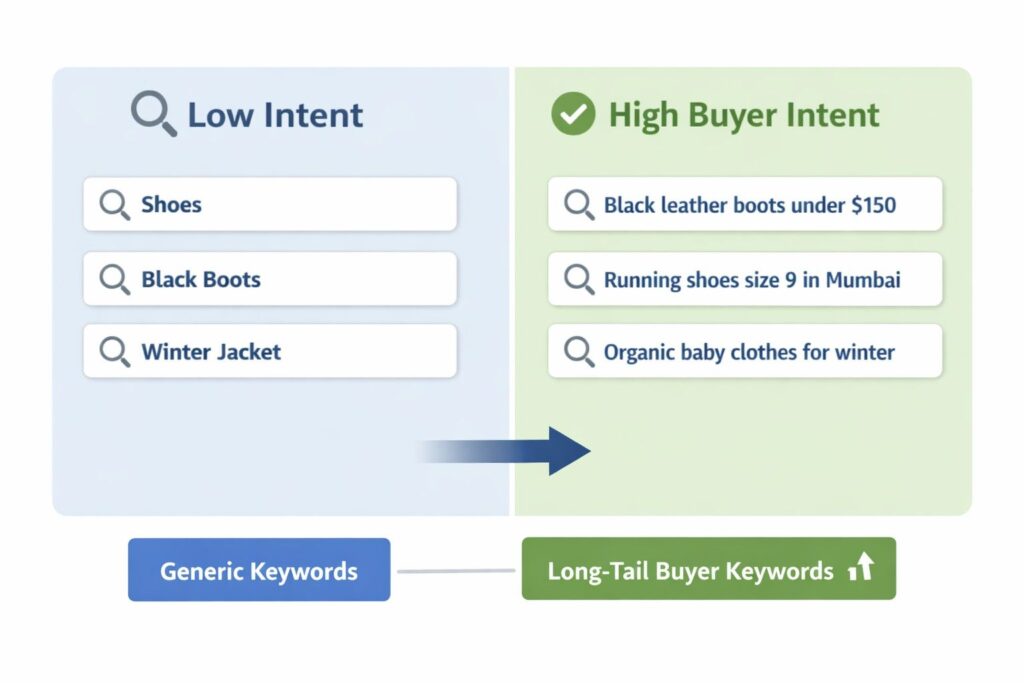
Instead of typing “boots,” users now search for:
- “Black leather boots under $150”
- “Running shoes size 9 in Mumbai”
- “Organic baby clothes for winter”
These are long-tail buyer intent keywords, highly specific queries that signal strong purchase intent.
And in 2026, this precision-driven search behavior dominates online shopping.
The Data Behind Long-Tail Dominance
Long-tail keywords are no longer optional – they’re essential.
| Metric | Insight |
| Share of total searches | 70%+ are long-tail queries |
| Conversion rate impact | 2–3x higher than generic keywords |
| Traffic growth from scalable landing pages | 30–50% increase |
Why do long-tail queries convert better?
Because they reflect clarity. When someone searches “gaming laptop 16GB RAM under $1000,” they’re not browsing; they’re ready to buy.
The Scalability Problem
Here’s the challenge:
If your store has:
- 500 products
- 10 attributes per product
- 20 location variations
- 5 price modifiers
You’re looking at thousands of possible keyword combinations. Manually creating optimized pages for each variation? Impossible.
- That’s where AI-powered programmatic SEO becomes critical.
What Programmatic SEO Helps You Capture
Instead of building pages one by one, you can systematically capture:
✔ Product + Attribute combinations (Size, color, brand, feature)
✔ Location-based variations (City, region, availability)
✔ Price-based searches (“Under $100,” “Premium range”)
✔ Comparison searches (“Best X vs Y”)
✔ Seasonal intent (“Winter jackets sale,” “Diwali gift sets”)
All generated through structured templates and AI-enhanced content.
The Strategic Advantage in 2026
Search engines now reward:
- Intent alignment
- Semantic depth
- Structured data
- High engagement signals
Programmatic SEO allows e-commerce brands to meet these signals at scale, without hiring massive content teams.
In 2026, the brands that win are not the ones with the most products —
They’re the ones with the most optimized entry points into search.
Programmatic SEO transforms your store from a static catalog into a dynamic search acquisition engine.
Free SEO Consultation
Get a custom growth plan for your website—completely free.
Core Components of an AI-Powered Programmatic SEO System
Building a scalable e-commerce SEO engine isn’t about publishing thousands of pages randomly. It’s about combining structured data, intelligent automation, and search intent alignment.
Here’s what powers a high-performing programmatic SEO system in 2026:
Scalable Keyword & Intent Research
Traditional SEO targets one keyword per page. Programmatic SEO identifies search patterns that can scale.
Instead of thinking in single keywords, think in search formulas:
Formula Framework:
Product + Feature + Price Modifier + Location
Example Queries:
- “Wireless headphones under $200 in Delhi”
- “Waterproof hiking boots for women size 8”
This structured approach allows you to generate hundreds (or thousands) of high-intent keyword combinations automatically, all aligned with real buyer behavior.
The key is identifying repeatable patterns that signal transactional or commercial intent, not just traffic.
Dynamic Page Templates
At scale, consistency is everything. Dynamic templates ensure each page is optimized while maintaining structure and efficiency.
A powerful e-commerce SEO template includes:
- Dynamic Title Tags with keyword variations
- AI-generated product summaries
- Structured specifications (size, brand, features)
- FAQ blocks targeting buyer questions
- Internal links to related categories or products
- Schema markup for enhanced SERP visibility
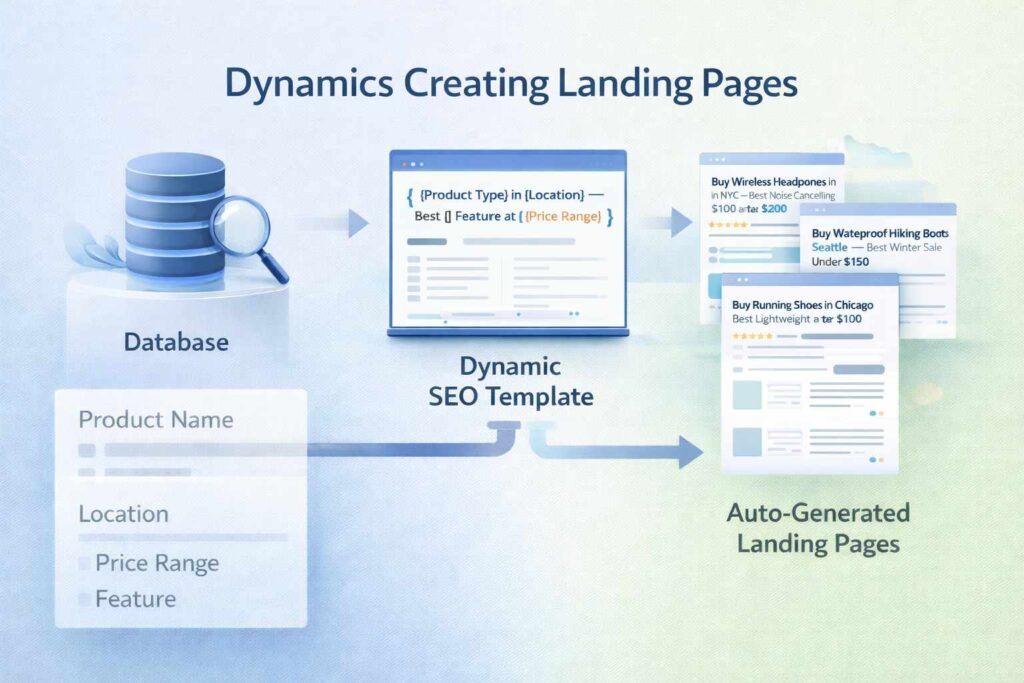
Example Template Logic:
Buy {Product Type} in {Location} – Best {Feature} at {Price Range}
This structure ensures:
- Keyword placement remains optimized
- Pages stay unique through dynamic data insertion
- Content remains scalable without duplication
Templates create structure. AI adds intelligence.
AI Content Generation
AI transforms basic templates into high-quality, semantically rich pages.
Instead of thin, repetitive content, AI can:
- Generate unique category introductions
- Create product comparison sections
- Write dynamic FAQs based on buyer intent
- Optimize meta descriptions for higher CTR
The result? Content that reads naturally while covering broader semantic variations – improving topical authority and reducing duplication risks.
Automated Technical SEO
Content automation alone isn’t enough. Technical SEO must scale with it.
A strong automated foundation includes:
- Structured Data (Product Schema, FAQ Schema, Breadcrumb Schema)
- Auto-generated XML Sitemaps
- Proper Canonical Tag Management
- Crawl Budget Optimization
- Dynamic Breadcrumb Navigation
When technical elements are automated correctly, search engines can efficiently crawl, interpret, and index thousands of pages — without confusion or wasted crawl resources.
Step-by-Step: Build Your Automated Traffic & Sales Machine
Here’s your practical blueprint to implement AI-powered programmatic SEO for e-commerce the right way — scalable, data-driven, and conversion-focused.
Step 1: Audit Your Product Database
Your product database is the fuel for programmatic SEO. Before generating pages, identify structured attributes that can create scalable keyword combinations.
Key attributes to extract:
- Size
- Color
- Brand
- Location availability
- Price range
- Seasonal tags
- Material / Specifications
The more structured your data, the more powerful your automation becomes. Clean, categorized product data ensures your generated pages are accurate, relevant, and optimized.
Step 2: Map Keyword Patterns (Build a Keyword Matrix)
Instead of targeting single keywords, build a keyword matrix model.
Example Keyword Matrix:
| Product | Modifier | Location | Intent |
| Running Shoes | Size 9 | Mumbai | Transactional |
| Winter Jackets | Under $100 | Delhi | Commercial |
| Gaming Laptops | 16GB RAM | India | Buyer Intent |
This structure becomes your page generation engine.
By combining product attributes with buyer modifiers and location signals, you can generate hundreds of high-intent landing pages automatically — all aligned with real search demand.
Step 3: Build SEO Templates
Templates ensure consistency and scalability across thousands of pages.
Create dynamic placeholders for:
- Title tags
- H1 headings
- Meta descriptions
- Product descriptions
- FAQ sections
- Structured data (Schema markup)
Example logic:
Buy {Product} in {Location} – Best {Feature} at {Price Range}
Templates maintain structure. Dynamic data keeps pages unique. This balance prevents duplication while enabling mass scalability.
Step 4: Integrate AI for Smart Content Blocks
AI enhances your templates by adding depth and relevance.
Use AI to:
- Expand product descriptions naturally
- Generate buying guide snippets
- Create dynamic FAQs based on user intent
- Suggest contextual internal links
- Improve semantic coverage
Instead of repetitive content, AI ensures each page feels informative and tailored — improving engagement and topical authority.
Step 5: Automate Publishing & Monitor Performance
Automation without measurement is risky.
Track performance metrics such as:
- Indexed pages
- Organic impressions
- Click-through rate (CTR)
- Conversion rates
- Revenue per landing page
This helps you identify which keyword patterns and templates generate the highest ROI. Double down on what converts — optimize or remove what doesn’t.
Automation without tracking = guesswork.
Advanced Programmatic SEO Tactics for 2026
As AI search evolves, basic automation won’t be enough. To truly dominate e-commerce SEO in 2026, you need smarter, data-driven enhancements like these:
Dynamic Inventory Pages
Instead of static product pages, use automation to update content based on stock levels, pricing changes, and availability. This keeps pages fresh, reduces bounce rates, and prevents users from landing on outdated or out-of-stock listings — improving both UX and rankings.
Filter Page Optimization
Not every filter combination deserves indexing. Identify high-intent filter patterns (like “Black Running Shoes Size 9”) and optimize only those pages. This protects crawl budget while capturing profitable long-tail searches.
Seasonal SEO Automation
Create pre-built templates for holidays, events, and seasonal demand spikes. Launch optimized landing pages instantly for searches like “Diwali gift hampers” or “Black Friday gaming laptops” without manual setup each year.
AI-Based Internal Linking Engine
Use AI to link related products, categories, and buying guides dynamically. Contextual internal linking improves crawl depth, distributes authority, and strengthens topical relevance — helping thousands of pages rank faster.
Common Mistakes to Avoid in Programmatic SEO
Automation can scale your e-commerce growth — but only if implemented correctly. Avoid these critical mistakes:
Generating Thousands of Thin Pages
Creating mass pages without meaningful content can harm rankings. Every programmatic page must provide real value, useful information, and clear intent — not just keyword variations.
Ignoring User Intent
Ranking for keywords isn’t enough. If the page doesn’t match buyer intent (informational, comparison, or transactional), it won’t convert — and search engines will notice poor engagement signals.
No Schema Implementation
Without structured data, search engines struggle to interpret your pages properly. Missing product schema, FAQ schema, or breadcrumbs can reduce visibility and opportunities for rich results.
Poor Canonical Control
Duplicate URLs from filters, attributes, or parameters can confuse search engines. Proper canonical tags ensure authority is consolidated and prevent indexing issues.
Not Monitoring Crawl Budget
Large e-commerce sites must control how search engines crawl pages. If bots waste time on low-value URLs, your high-intent landing pages may not get indexed efficiently.
Remember:
Automation should improve quality and efficiency — not create SEO clutter. Smart programmatic SEO is structured, strategic, and performance-driven.
Free SEO Consultation
Get a custom growth plan for your website—completely free.
Final Action Plan
If you want to implement AI-powered programmatic SEO for e-commerce:
Start with Structured Data
Structured data is the backbone of programmatic SEO. Implement Product Schema, FAQ Schema, and Breadcrumb Schema to help search engines understand your pages clearly. Proper schema improves rich snippets, boosts CTR, and ensures thousands of programmatic pages are indexed correctly without confusion.
Identify Scalable Keyword Patterns
Instead of targeting isolated keywords, look for repeatable search formulas like:
Product + Attribute + Modifier + Location
This allows you to generate hundreds or even thousands of long-tail buyer-intent pages systematically. The goal is pattern-based expansion — not random keyword stuffing.
Build Dynamic SEO Templates
Create structured page templates with placeholders for titles, H1s, meta descriptions, FAQs, and internal links. Dynamic templates ensure every page is consistent, optimized, and scalable — while still allowing AI to generate unique, context-rich content blocks.
Integrate AI Intelligently
AI should enhance your content — not create thin pages. Use AI to expand product descriptions, generate FAQs, improve semantic relevance, and personalize content variations. Always combine automation with human quality control to maintain trust and authority.
Monitor Performance Continuously
Automation doesn’t mean “set and forget.” Track indexed pages, impressions, rankings, and conversion rates regularly. Identify which keyword patterns are driving revenue and double down on high-performing page structures.
Optimize for Conversions — Not Just Traffic
Traffic alone doesn’t grow revenue. Add clear CTAs, comparison tables, trust signals, and fast-loading design elements to your programmatic pages. High-intent landing pages should guide users smoothly from search to checkout.
Ready to Build Your Automated Traffic & Sales Machine?
At Selnox Infotech, we specialize in AI-powered programmatic SEO for e-commerce brands that want scalable traffic, better rankings, and measurable sales growth.
We don’t just create pages — we build automated SEO systems designed to:
- Capture long-tail buyer intent
- Scale thousands of landing pages
- Improve conversions
- Future-proof your SEO strategy
Want to dominate e-commerce search in 2026?
Contact Selnox Infotech today for a customized programmatic SEO strategy that turns your store into a revenue-generating machine.