
Bing AI SEO in 2026: How to Optimize Your Website for Maximum Visibility & Rankings
Search in 2026 is no longer about simply ranking on page one; it’s about being selected by AI as the best answer. With Bing integrating AI deeply into its search experience, users now receive summarized, conversational responses instead of traditional lists of links.
This shift has made Bing AI SEO a critical strategy for businesses that want to stay visible. If your content isn’t optimized for AI interpretation, structure, and intent, it may never appear in front of your audience, even if it technically “ranks.”
To succeed, you need a smarter, more strategic approach that combines content clarity, intent optimization, and technical precision.
How Bing AI Search Works and What It Means for SEO
Bing AI operates differently from traditional search engines. Instead of just crawling and ranking pages, it analyzes, interprets, and synthesizes information from multiple sources to generate a single, accurate response.
This means your content is no longer competing only for rankings; it’s competing to be included in AI-generated answers.
AI Prioritizes Intent Over Keywords
In traditional SEO, targeting keywords like “Bing SEO tips” might have worked. But in Bing AI SEO in 2026, the focus has shifted to long-tail, conversational queries such as:
- “how to optimize website for Bing AI search results.”
- “best strategies to improve Bing AI rankings in 2026”
AI understands these queries at a deeper level, identifying user intent and expecting content that directly addresses it.
Content Extraction Is the New Ranking
Bing AI breaks content into sections and selects the most relevant parts to display in answers. If your content is not:
- Clearly structured
- Easy to read
- Directly answering a query
…it is less likely to be used, regardless of its overall quality.
Authority Plays a Bigger Role
AI systems prioritize trusted sources. This means your website must demonstrate expertise, consistency, and credibility to be selected as a reliable answer source.
Advanced Content Optimization Strategies for Bing AI SEO
To truly succeed in Bing AI search optimization, you need more than basic SEO—you need a content strategy designed for AI consumption.
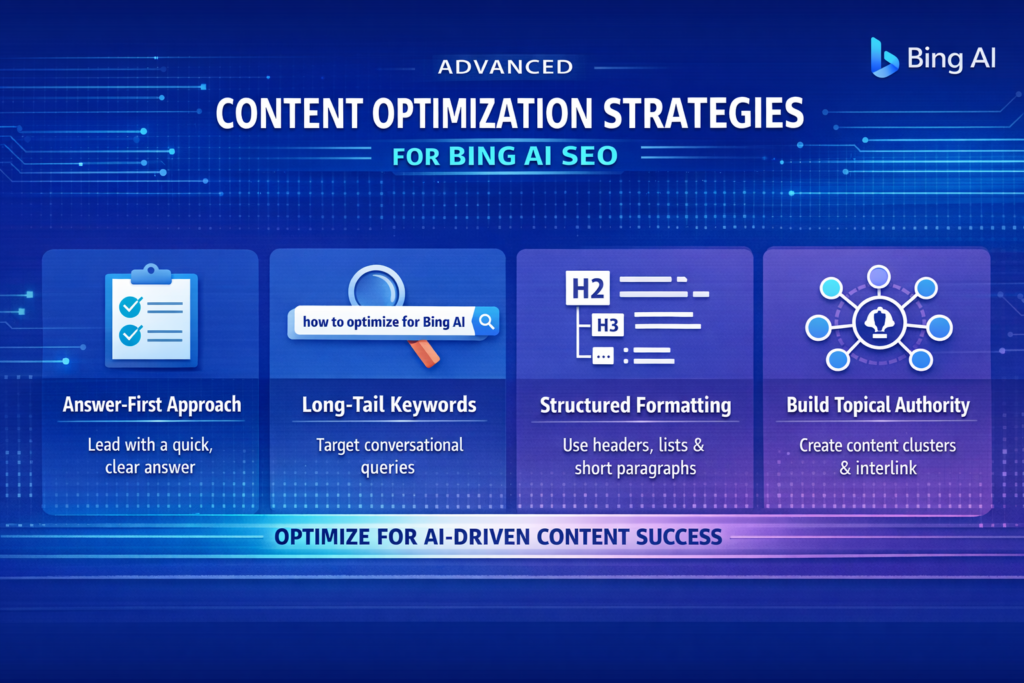
1. Use an Answer-First Content Model
Start your content with a clear, concise answer within the first few lines. This increases the likelihood of your content being featured in AI summaries.
Then expand the answer with detailed explanations, examples, and supporting information. This layered approach ensures your content satisfies both AI and human readers.
2. Optimize for Long-Tail and Conversational Keywords
Modern search behavior is conversational. Users interact with AI tools as if they’re asking questions.
Instead of focusing on short keywords, target long-tail keywords for Bing AI SEO, such as:
- “how to rank website in Bing AI in 2026”
- “best way to optimize content for AI search engines”
These keywords not only improve relevance but also align perfectly with how AI interprets queries.
Free SEO Consultation
Get a custom growth plan for your website—completely free.
3. Structure Content for Maximum AI Extraction
Formatting is no longer optional—it’s a ranking factor in AI search.
Here’s how to structure your content effectively:
| Content Element | Why It Matters | Best Practice |
| Headings (H2, H3) | Helps AI understand sections | Use clear, keyword-rich headings |
| Bullet Points | Improves readability | Break complex ideas into lists |
| Short Paragraphs | Enhances extraction | Keep paragraphs 2–3 lines |
| FAQs Section | Matches query format | Add question-based content |
A well-structured page allows Bing AI to quickly identify and extract valuable information.
4. Build Topical Authority with Depth
Publishing a single blog is not enough. To rank consistently, you need to build topical authority.
This means creating multiple pieces of content around a central topic and interlinking them. For example:
- Bing AI SEO guide
- AI content optimization strategies
- Long-tail keyword research for AI search
This approach signals to Bing that your website is a trusted source within a niche, increasing your chances of being featured.
Technical SEO Strategies to Improve Bing AI Visibility
While content is critical, technical SEO ensures that Bing can crawl, understand, and prioritize your website effectively.
Optimize Website Performance and Accessibility
Fast-loading, mobile-friendly websites perform better in both traditional and AI search. A smooth user experience also increases engagement, which indirectly supports visibility.
Use Structured Data (Schema Markup)
Schema markup helps Bing understand the context of your content. By implementing structured data such as FAQ schema, article schema, or how-to schema, you make it easier for AI to interpret your page.
This increases your chances of appearing in rich results and AI-generated answers.
Implement IndexNow for Faster Indexing
IndexNow allows you to instantly notify Bing when you publish or update content.
This is especially important in 2026, where fresh and relevant content is prioritized in AI search results. Faster indexing means your content becomes eligible for AI visibility sooner.
Maintain Clean and Semantic HTML Structure
A well-organized codebase improves how search engines read your content. Use proper heading tags, avoid unnecessary clutter, and ensure your HTML structure is logical and clean.
Bing AI SEO vs Traditional SEO: The Strategic Shift
The evolution from traditional SEO to AI-driven SEO is significant.
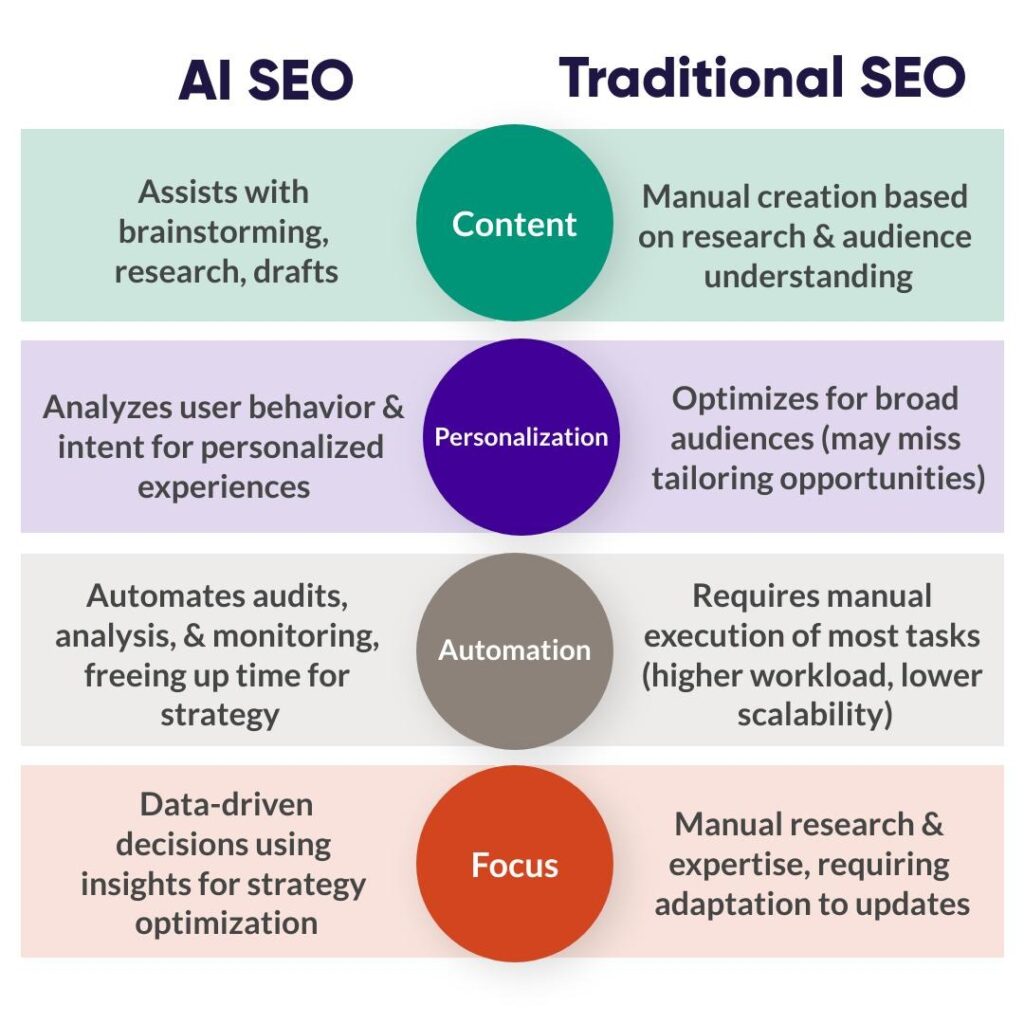
| Aspect | Traditional SEO | Bing AI SEO 2026 |
| Focus | Rankings | AI-generated visibility |
| Keywords | Short keywords | Long-tail, conversational queries |
| Content | Keyword-focused | Answer-focused |
| Goal | Click-through traffic | Inclusion in AI responses |
| Strategy | On-page + backlinks | Intent + structure + authority |
In simple terms, you’re no longer just optimizing for search engines, you’re optimizing for AI decision-making systems.
Free SEO Consultation
Get a custom growth plan for your website—completely free.
Conclusion
Bing AI is reshaping the future of search, and businesses that adapt early will gain a major competitive advantage.
To succeed in Bing AI SEO in 2026, your strategy must go beyond traditional practices. Focus on:
- Creating clear, structured, and helpful content
- Targeting long-tail, intent-driven keywords
- Building authority within your niche
- Strengthening your technical SEO foundation
When these elements come together, your website doesn’t just rank; it becomes a trusted source that AI relies on.
Grow with Selnox Infotech
If you want to dominate AI-powered search, you need more than basic SEO, you need a strategy built for the future.
Selnox Infotech specializes in Bing AI SEO, content optimization, and advanced search strategies that help your business gain maximum visibility.
Start optimizing today and position your website as the top answer
Frequently Asked Questions (FAQs)
How can I optimize my website for Bing AI search in 2026?
To optimize your website for Bing AI search, focus on creating answer-focused, well-structured content that directly matches user intent. Use long-tail conversational keywords, implement schema markup, improve page speed, and ensure your content is easy for AI to extract using headings, lists, and clear formatting.
What type of content ranks best in Bing AI search results?
Content that performs best in Bing AI search includes in-depth guides, FAQs, step-by-step tutorials, and comparison articles. These formats provide clear answers and structured information, making it easier for AI systems to summarize and display your content in search results.
Are long-tail keywords important for Bing AI SEO?
Yes, long-tail keywords are essential for Bing AI SEO. Since users interact with AI using conversational queries, targeting phrases like “how to optimize website for Bing AI search results” helps improve relevance and increases the chances of your content being selected for AI-generated answers.
Does technical SEO still matter for Bing AI rankings?
Technical SEO remains a crucial factor. Elements like fast loading speed, mobile optimization, structured data (schema markup), and clean HTML structure help Bing crawl and understand your website more effectively, which supports better visibility in AI-driven results.
What is the difference between Bing AI SEO and traditional SEO?
Traditional SEO focuses on improving rankings in search engine result pages, while Bing AI SEO focuses on getting your content featured in AI-generated answers. This requires optimizing for intent, structure, and clarity rather than just keywords and backlinks.