
Link Building Strategies That Actually Work in 2026
Backlinks are still one of the clearest trust signals search engines have. But “get more backlinks” isn’t a strategy. It’s a wish. This guide covers the top 6 tactics that are earning links in 2026, what to avoid, what it actually costs, and why links now do double duty. They help you rank in Google, and they increasingly get you cited by AI tools like ChatGPT and Perplexity.
| Strategy | What it looks like | Best for |
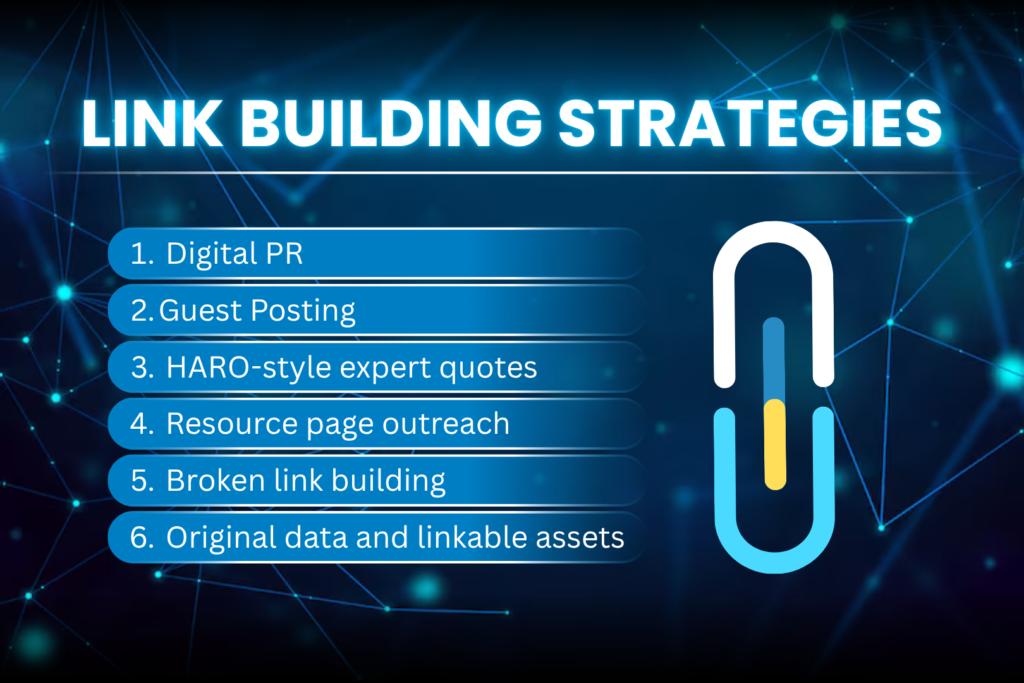
| Digital PR | Pitching a real story or data point to journalists | The single highest-rated tactic, but needs a genuine story to pitch |
| Guest posting | Writing an original article for a niche site in exchange for a byline link | Building topical authority over time, works best on a steady cadence |
| HARO-style expert quotes | Answering journalist requests for expert commentary | Low cost, needs fast and credible responses |
| Resource page outreach | Pitching your page for inclusion on a curated links list | Niche topics that already have active resource pages |
| Broken link building | Offering your page as a replacement for a dead link | Sites with well-maintained, relevant content in your space |
| Original data and linkable assets | Publishing research, surveys, or a unique dataset | Long-term compounding links, at the cost of upfront research time |
What is Link Building?
Link building is the process of getting other websites to link to yours. Each link acts as a vote of confidence, a signal to search engines that someone else considers your content worth pointing to. Not all votes count equally. A link from a well-established, relevant site carries far more weight than one from an obscure or unrelated one.
In practice, the sites that build links successfully treat it as a natural byproduct of good content and real relationships, not a separate checklist item to knock out at the end. Link building is one piece of a bigger picture that includes content, technical SEO, and increasingly, how AI platforms perceive your brand. If you’re building out a full SEO program rather than a single campaign, our Content & Link Building services cover how this fits into the broader strategy.
Why Link Building Still Matters in 2026
| Finding | Source | Why it matters |
| The #1 organic result has 3.8x more backlinks than positions #2 through #10 | Backlinko, analysis of 11.8 million search results | Backlink counts still track closely with where a page ranks |
| 95% of all pages on the web have zero backlinks | Backlinko, same study | A real link building effort separates you from most competing content by default |
| Disavowing backlinks cut traffic 13.3%; reinstating them recovered 99% of it | Ahrefs, controlled disavow experiment | This is causal evidence, not just correlation. The links were doing real work |
| Agencies allocate 32.1% of their SEO budget to link building | Editorial.Link, 2026 survey of 518 SEO professionals | Link building is the single largest line item in the average SEO budget |
Free Link Building Strategy Session
Get a custom link building plan built around your site, completely free.
How to Build Links to Your Website: The Basics
Before getting into specific tactics, a few fundamentals apply no matter which strategy you pick, and skipping them is the most common reason link campaigns stall out:
- Publish something worth linking to first. Outreach only works if there’s a genuine reason for someone to link to you: a useful guide, a unique dataset, a tool, or an original point of view.
- Prioritize relevance over raw authority. A moderately-authoritative site in your niche is usually more valuable, and safer, than a high-authority site with no topical connection to you.
- Diversify your anchor text. Natural link profiles use branded and descriptive anchors far more often than exact-match keywords.
- Track referring domains, not just backlink count. Ten links from ten different domains generally outweigh fifty links from the same domain.
Link Building Strategies That Actually Work
Digital PR
Digital PR means pitching a compelling story, dataset, or expert take to journalists and publications rather than asking directly for a link. It’s currently rated the most effective single tactic by SEO professionals, largely because the links it earns are editorial. They get placed because a journalist decided your input was genuinely useful, not because you asked for a link.
Guest Posting
Guest posting means writing an original article for another site in your niche, in exchange for a byline and a contextual link back to your own. It’s one of the oldest tactics on this list and still one of the more reliable ones, provided it’s done for the right reason. The version that gets sites penalized is different: mass-producing generic posts purely to plant a link.
HARO-Style Expert Quotes
Services that connect journalists with expert sources (the space HARO used to occupy) remain one of the lowest-cost ways to get quoted, and linked, in outlets you couldn’t otherwise access. The tradeoff is competition. Response quality now matters more than response speed, since journalists are fielding more pitches than ever.
Resource Page Link Building
Many sites maintain curated “resource” or “further reading” pages in specific niches. If you have something genuinely useful to add, a short, specific pitch to the page owner explaining why your resource belongs there is a straightforward way to earn a relevant, contextual link.
Broken Link Building
This tactic finds dead links on relevant pages, then offers your own (live, relevant) page as a replacement. It works because you’re doing the site owner a favor. You’re fixing something broken rather than just asking for something. It also has a natural advantage in 2026, since link rot is a persistent problem and there’s a steady supply of genuinely broken links to find.
Original Data and Linkable Assets
Original research, surveys, and data-driven reports consistently earn links other content types don’t, because they give writers something to cite that doesn’t exist anywhere else. This doesn’t have to mean a massive study. Even a modest, well-documented dataset specific to your niche can become a reference point other sites link back to for years.
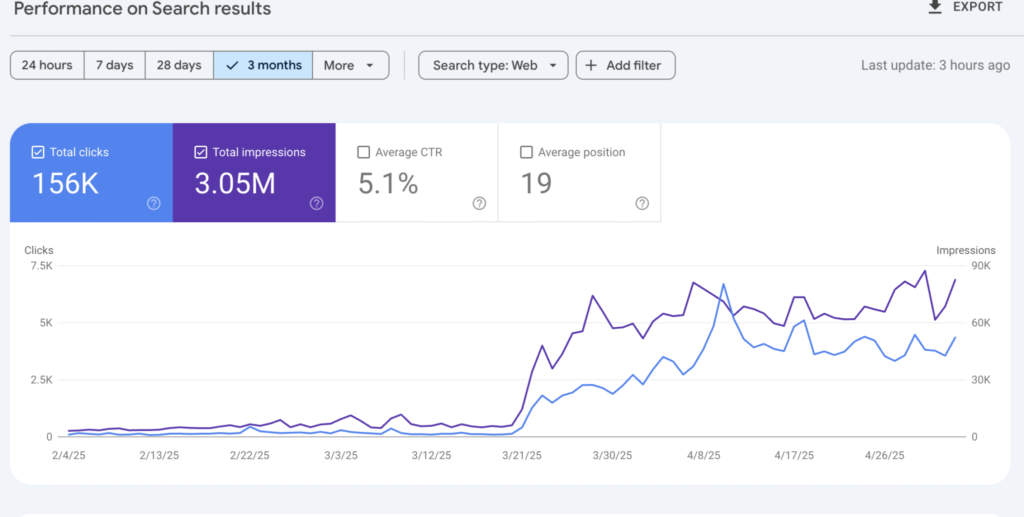
Our G11 case study proves that this works for small scales as well. We started with only 12 referring domains and still reached 156,000 clicks, a genuinely useful reminder that link quality and relevance can outperform sheer link volume.
Organic Link Building Tips
Not every link requires a pitch email. A few tactics compound quietly over time without active outreach:
- Unlinked mention of reclamation. Set up alerts for your brand name, and when a site mentions you without linking, ask them to add one.
- Internal linking. It’s not a backlink, but strong internal linking spreads authority across your own site and helps new pages get found and ranked faster.
- Consistent publishing. Sites that publish on a steady cadence tend to accumulate backlinks faster than those that publish sporadically, simply because there’s more current, citable content available at any given time.
- Wikipedia citations. Adding your content as a source on a relevant Wikipedia page (where it genuinely adds value) earns a no follow link, but one that’s highly trusted and can drive real referral traffic.
What to Avoid
Some tactics still show up in “quick win” advice despite carrying real risk:
- Buying links outright, especially from low-quality or clearly link-selling sites, violates search engine guidelines and can trigger manual penalties.
- Link farms and private blog networks (PBNs) create an obvious, detectable pattern that search engines actively look for.
- Exact-match anchor text overuse. Building links where the anchor text is always your target keyword is one of the clearest signals of manipulation, and it can do more harm than the links do good.
These carry the same reputational risk we’ve flagged elsewhere for black-hat SEO tactics generally: even when they briefly work, the downside (a penalty, a costly recovery, lost trust) tends to outweigh the upside.
Link Building and GEO: Why Citations Matter Twice Now
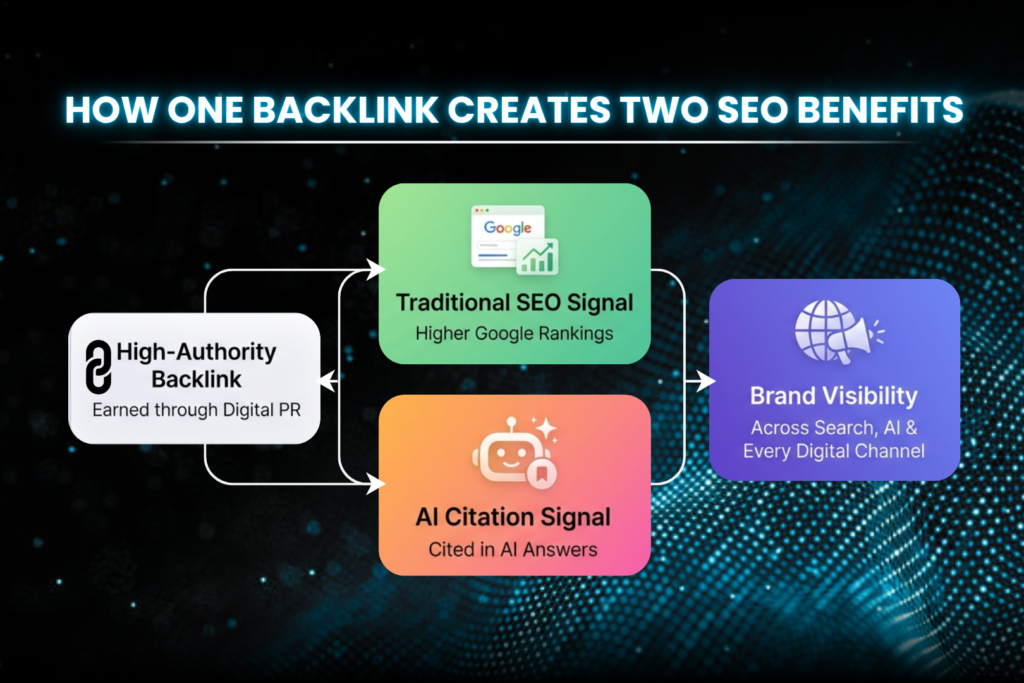
A backlink has always functioned as a citation. It proves that someone considered your content worth referencing. That function hasn’t changed in 2026, but who’s reading the citation has. AI systems that generate answers for tools like ChatGPT and Perplexity also weigh authority and citation patterns when deciding what to reference, which means the same link building work that helps you rank in Google can also influence whether AI platforms mention your brand at all.
Recency and authority for AI systems
This is the core idea behind generative engine optimization (GEO): structuring your content so AI systems trust it enough to cite it directly, the same way you’d optimize for Google rankings. If you want the full picture, our guide to Generative Engine Optimization (GEO) covers how AI-driven search is changing visibility beyond traditional rankings. Link building and GEO increasingly reinforce each other rather than operating as separate disciplines.
Free Link Building Strategy Session
Get a custom link building plan built around your site, completely free.
Frequently Asked Questions
What is a backlink?
A backlink is a hyperlink from one website to another. Search engines treat backlinks as a signal of trust and relevance. The more high-quality, relevant sites that link to a page, the more authority that page tends to accumulate in search rankings.
What is anchor text?
Anchor text is the clickable text of a hyperlink. Search engines use it as a clue about what the linked page is about, which is why natural, varied anchor text, rather than repeated exact-match keywords, is considered healthier for a link profile.
How long does link building take to show results?
Link building is a compounding strategy, not an instant one. Most practitioners report seeing measurable ranking movement within a few months, with stronger effects building over 6 to 12 months as a site’s overall link profile matures.
Is buying backlinks ever safe?
No. Paid links that pass ranking credit violate search engine guidelines regardless of framing (sponsorships, “guest post fees,” and similar terms) and risk a manual penalty. Paid placements that use proper disclosure, such as nofollow or sponsored tags, are a different, lower-risk category, but they don’t pass the same ranking value.
Do I need a large budget to build links?
No. Some of the most durable link building tactics, including broken link building, unlinked mention reclamation, and resource page outreach, cost time rather than money. A bigger budget mainly buys scale and speed, such as running more digital PR campaigns at once, not a working link building strategy that a smaller budget can’t achieve at all.