
How Responsiveness Became a Powerful Reputation Signal for Brands in 2026
In the modern digital landscape, responsiveness has evolved into one of the most visible indicators of a brand’s credibility. It’s no longer limited to customer support—it now plays a direct role in shaping how businesses are perceived online.
Every interaction, whether it’s a reply to a review, a comment on social media, or a response to a complaint, contributes to a brand’s public image. In a world where customers research before they buy, responsiveness has become a deciding factor.
The Transparency Era of Customer Interaction
Digital platforms have changed the rules of engagement. Customer conversations that once happened privately are now visible to everyone. Reviews, replies, and complaint resolutions are all part of a brand’s public record.
Before making a decision, potential customers often go beyond ratings and explore how businesses communicate. They look for signs of attentiveness, professionalism, and problem-solving ability. This shift has turned responsiveness into a powerful trust signal.
Why Engagement Behavior Defines Brand Perception
Responsiveness reflects how a business operates behind the scenes. It gives customers insight into how seriously a company takes feedback and how efficiently it handles issues.
A brand that responds consistently sends a strong message it listens, it cares, and it acts. On the other hand, inconsistent or delayed engagement can create doubt. Customers may question whether the same lack of attention will apply to their experience.
In essence, responsiveness is now a reflection of operational discipline.
Key Indicators That Shape Responsiveness Signals
Several observable behaviors contribute to how responsiveness is perceived:
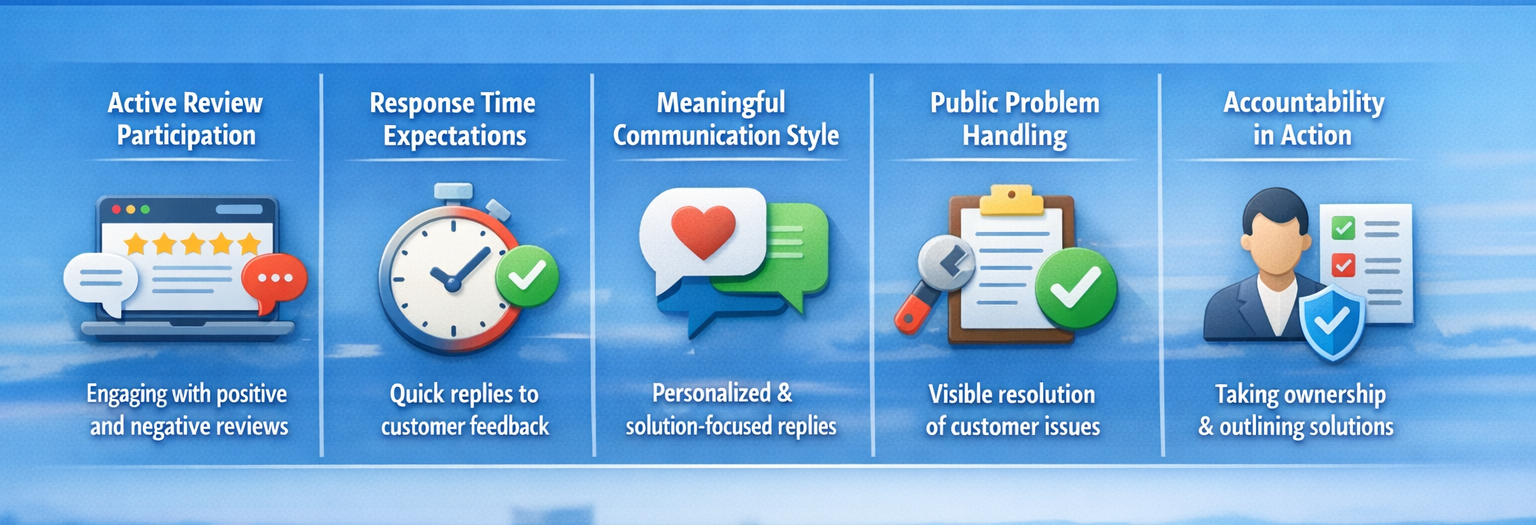
• Active Review Participation
Customers notice whether businesses engage with reviews regularly. Responding to both positive and negative feedback shows balance and commitment.
• Response Time Expectations
Speed matters more than ever. Quick replies signal efficiency, while delays can suggest neglect. In fast-paced digital environments, timing directly impacts perception.
• Meaningful Communication Style
Generic replies are easy to spot and often ignored. Customers value responses that feel human, relevant, and solution-focused.
• Public Problem Handling
How a brand resolves issues in public spaces influences trust. Visible solutions reduce uncertainty and build confidence among potential buyers.
• Accountability in Action
Taking ownership of mistakes and communicating clearly about next steps demonstrates reliability and strengthens brand image.
How Technology Interprets Your Responsiveness
Responsiveness is not just for customers—it is also evaluated by digital systems. Platforms and AI tools analyze engagement patterns to assess credibility and relevance.
Search engines track how frequently and quickly businesses respond. These signals contribute to local visibility and rankings. At the same time, AI evaluates tone and sentiment, identifying whether responses are helpful, empathetic, and solution-driven.
This means your replies are not just conversations—they are data points influencing how your brand is discovered online.
The Risk of Staying Silent
Ignoring customer feedback can be more damaging than negative reviews themselves. When businesses fail to respond, they leave concerns unanswered and allow one-sided narratives to dominate.
Silence can suggest:
- Lack of customer care
- Poor service management
- Low accountability
Even poorly handled responses can hurt credibility. Defensive or vague replies may push potential customers away rather than reassure them.
In today’s environment, not responding is a visible decision and often a costly one.
Free SEO Consultation
Get a custom growth plan for your website—completely free.
Creating a Consistent Response Framework
To succeed, brands need a structured approach to responsiveness. It should be proactive, consistent, and aligned with overall brand values.
An effective framework includes:
- Monitoring all feedback channels regularly
- Responding promptly with clarity and professionalism
- Personalizing interactions to build genuine connections
- Resolving issues with actionable solutions
- Using customer feedback as a tool for continuous improvement
When done right, responsiveness becomes more than a task it becomes a competitive advantage.
Final Takeaway
Responsiveness has become a defining element of brand reputation in 2026. It influences how customers perceive your business and how digital platforms rank and recommend it.
Brands that embrace timely, thoughtful, and transparent communication build stronger trust and long-term loyalty. Those who ignore it risk losing visibility, credibility, and customer confidence.
In a world where every interaction is public, responsiveness is no longer optional—it’s a powerful signal of who you are as a brand.