
What is Product Development? A Complete Guide for Businesses
In today’s competitive market, businesses must continuously innovate to stay ahead. One of the most important processes that drives innovation and business growth is product development. Whether you are launching a new product or improving an existing one, having a structured product development strategy can help businesses create solutions that meet customer needs and market demands.
Product development involves transforming an idea into a successful product that delivers value to customers. From idea generation and market research to product design, development, and launch, every stage plays a crucial role in building a product that stands out in the market.
In this complete guide, we will explore what product development is, its stages, types, challenges, and best practices businesses can follow to build successful products.
What is Product Development?
Product development refers to the process of designing, creating, and launching a new product or improving an existing one to meet market needs. It involves multiple steps, including research, product design, prototyping, testing, and product launch.
Businesses use a structured product development process to turn ideas into functional products that solve real customer problems. This process helps companies create innovative products while minimizing risks and development costs.
Product development can apply to both physical products and digital solutions, such as mobile apps, software platforms, or consumer goods. A well-planned product development lifecycle ensures that businesses create products that are not only innovative but also market-ready.
Why Product Development is Important for Businesses
Investing in an effective product development strategy is essential for businesses that want to grow and stay competitive.
Here are some key reasons why product development matters:
1. Encourages Innovation
Continuous product development allows businesses to introduce new ideas and improve existing products.
2. Meets Customer Needs
Understanding customer feedback and market demands helps businesses develop products that solve real problems.
3. Provides Competitive Advantage
Companies that invest in innovation and product improvement can stand out from competitors.
4. Increases Revenue Opportunities
Launching new products opens new markets and creates additional revenue streams.
5. Strengthens Brand Value
Businesses that consistently deliver high-quality products build stronger trust and credibility with customers.
Key Stages of Product Development
The product development lifecycle typically involves several structured stages that guide businesses from concept to launch.
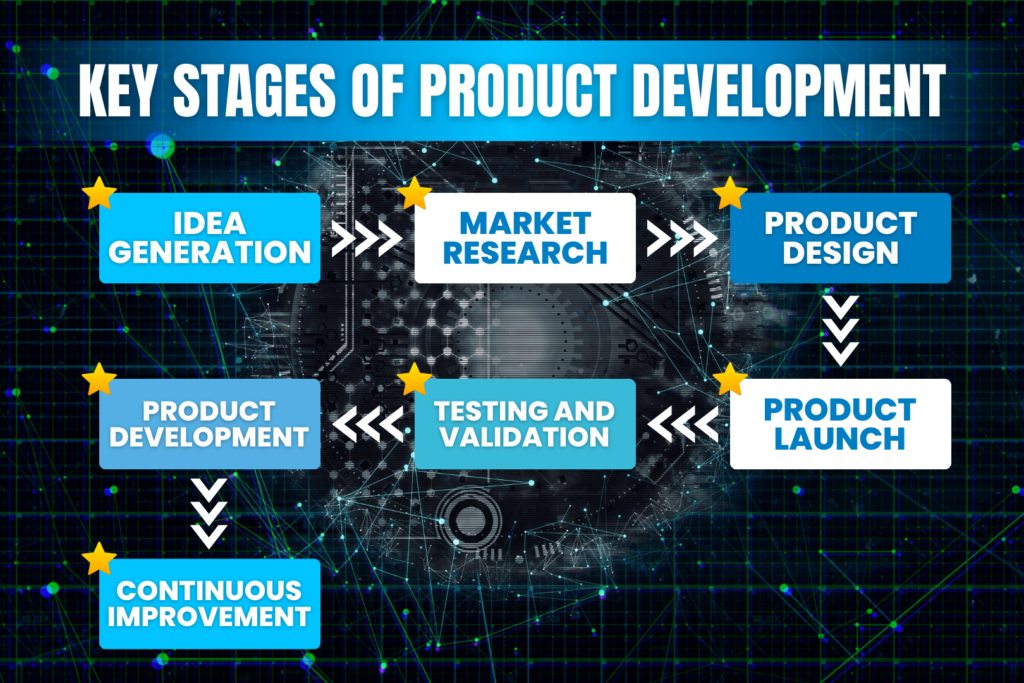
1. Idea Generation
The first step is generating product ideas based on market trends, customer feedback, and business opportunities. Companies often brainstorm ideas internally or gather insights from customer research.
2. Market Research
Market research helps businesses understand customer needs, market demand, and competitor strategies. This stage validates whether the product idea has real market potential.
3. Product Design
During this phase, businesses create the product concept, design, and user experience. Designers and developers work together to build prototypes or early models.
4. Product Development
The development phase focuses on building the actual product. This may involve software development, engineering, coding, or manufacturing processes, depending on the product type.
Many companies start with an MVP (Minimum Viable Product) to test the product with real users before full development.
5. Testing and Validation
Testing ensures the product functions correctly and meets quality standards. Businesses perform product testing, usability testing, and quality assurance to identify and fix issues.
6. Product Launch
After testing, the product is introduced to the market through marketing campaigns, product announcements, and distribution strategies.
7. Continuous Improvement
Product development does not end with launch. Businesses continue collecting customer feedback and updating the product with new features or improvements.
Free Product Development Consultation
Get a custom growth plan for your website—completely free.
Types of Product Development
Businesses use different product development approaches depending on their goals and market needs.
New Product Development (NPD)
Creating completely new products that solve unique problems or enter new markets.
Product Improvement
Enhancing existing products by adding new features or improving performance.
Custom Product Development
Developing products tailored for specific clients or business requirements.
Digital Product Development
Building digital solutions such as mobile apps, SaaS platforms, and software products.
Product Development vs Product Management
Although these terms are often used together, they serve different roles within a business.
| Feature | Product Development | Product Management |
| Focus | Building the product | Planning and strategy |
| Role | Developers and engineers | Product managers |
| Goal | Create product features | Define product vision and roadmap |
Both teams work closely to ensure the product aligns with business goals and customer needs.
Common Challenges in Product Development
Despite its benefits, businesses often face challenges during the product development process.
Some common challenges include:
- Lack of proper market research
- Poor planning and unclear product strategy
- Budget and resource limitations
- Delays in development timelines
- Communication gaps between teams
- Difficulty understanding customer needs
Overcoming these challenges requires proper planning, skilled teams, and a structured development process.
Best Practices for Successful Product Development
Businesses can improve their chances of success by following proven product development best practices.
Conduct Thorough Market Research
Understanding the target audience helps businesses create products that solve real problems.
Build an MVP First
Launching a minimum viable product allows companies to test ideas quickly and gather user feedback.
Focus on User Experience
Products that provide a smooth and user-friendly experience have a higher chance of success.
Use Agile Development Methods
Agile methodologies help teams work faster, adapt to changes, and improve product quality.
Collect Customer Feedback
Listening to users and making improvements based on feedback helps businesses continuously enhance their products.
Future Trends in Product Development
Modern product development is evolving rapidly with new technologies and strategies.
Some emerging trends include:
- AI-driven product development
- Data-driven decision making
- Rapid prototyping
- Customer-centric design
- Agile and lean product development
Businesses that adopt these trends can innovate faster and create better products for their customers.
Free Product Development Consultation
Get a custom growth plan for your website—completely free.
Need Expert Product Development Services?
If you’re looking to turn your idea into a successful product, Selnox Infotech can help. Our team specializes in custom software development, digital product development, and innovative technology solutions tailored to your business needs.
Whether you’re a startup building your first product or an established company looking to innovate, Selnox Infotech provides end-to-end product development services to help you succeed.
Contact Selnox Infotech today and bring your product ideas to life with expert development solutions.